

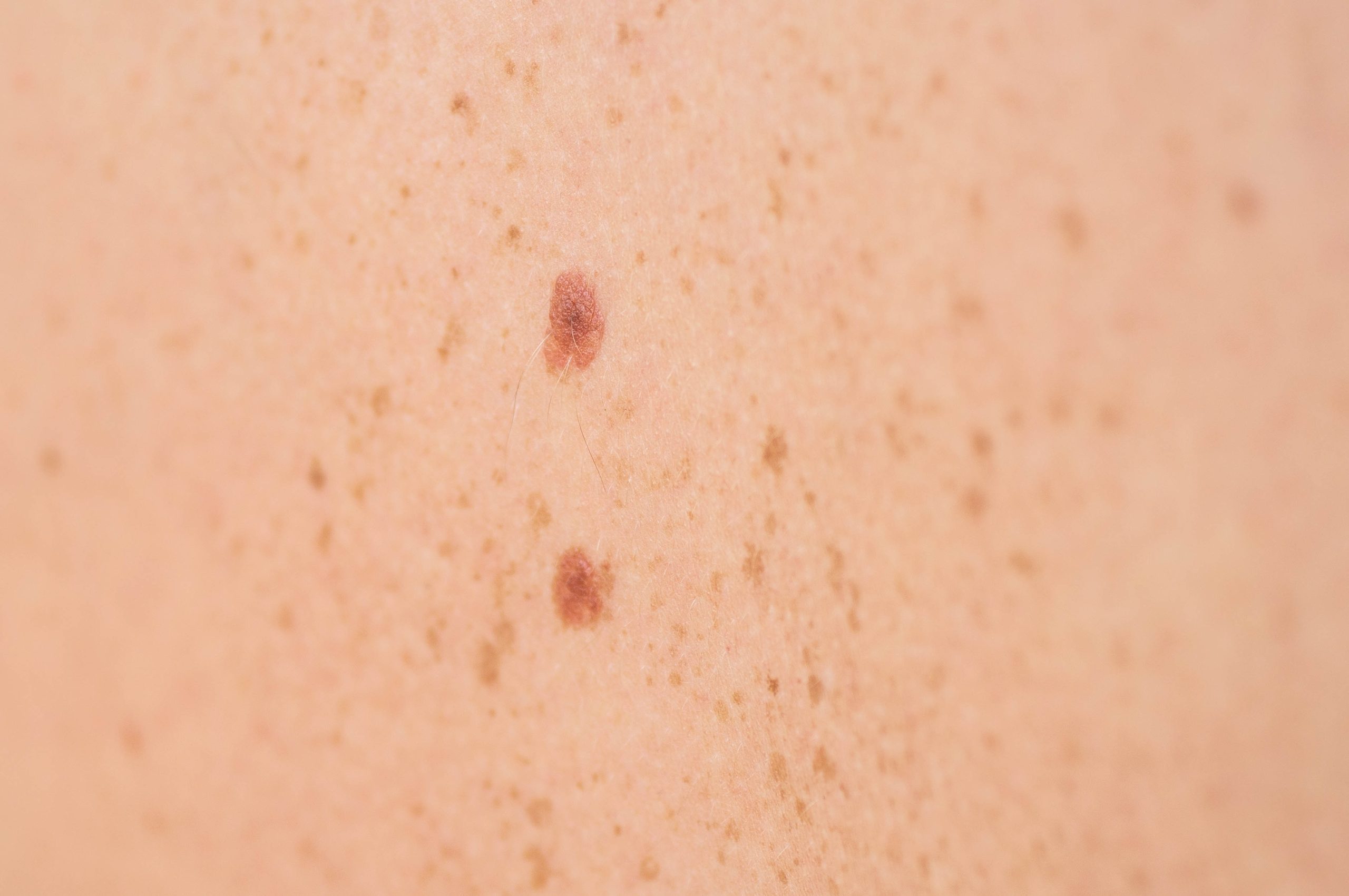
Spot Treatment
Spot treatment refers to skin lesions that develop as a result of prolonged exposure to UV rays, showing variations in pigment ranging from light yellow to dark brown. These spots are also influenced by genetic factors, hormonal status, fluid intake, and medications.
Take care of spots…
Exposure to sunlight intensifies the darkening of colors in spots. However, sunlight is not the sole cause of spots. Tanning beds, which have become increasingly popular in recent years, can also lead to spot formation.
Effects of sunlight on the skin
The harmful effects of the sun on the skin are primarily due to UVA and UVB rays. While there may not be much awareness about these rays or their differences, it is known that UVA rays are the ones that reach the Earth’s surface but cannot penetrate the ozone layer.
Because of this characteristic, UVA rays are found to be 1000 times more intense in sunlight compared to UVB rays. The tanning effect occurs because these rays can penetrate through clouds, glass, and even into the deeper layers of the skin. UVB rays, on the other hand, can reach the Earth’s surface, causing sunburns or reddening of the skin. Their effects on the skin also lead to damage to skin cells, connective tissue, and blood vessels in the skin.
Although it has been said that UVB rays are more harmful than UVA rays, recent studies have revealed that UVA rays are more damaging. Consequently, individuals who work outdoors or engage in prolonged, unprotected sun exposure are at risk of developing skin cancer.
Pigmentation
Pigmented lesions are abnormal changes in color in certain areas of the skin due to changes in pigments.
Causes of pigmented lesions include:
AgeingSun exposure over time
Laser treatment for pigmented lesions is not easy, thus requiring experienced professionals and appropriate laser equipment for effective treatment. Different lasers may treat lesions in varying ways, some being more superficial while others more aggressive. Considering the rapid technological advancements in the field of medical aesthetics, such procedures and treatments are not suitable for university or government hospitals. However, given individuals’ aesthetic concerns, they should be performed by doctors specialized in this field.
Spot treatments used in our center:
Spot Treatment with Phototherapy
Melanin pigment gives color to the skin. Spot formation occurs due to an excess of melanin pigment.
Causes of these spots include:
From birthAdvancing ageDamage caused by the sun to the skin
During laser spot treatment, the laser energy is absorbed intensively by cells containing melanin. Meanwhile, there is little to no effect on other skin cells with different colors.
Laser spot treatment is not very painful. Anesthetic creams can be applied before the procedure to minimize discomfort.
Precautions before starting treatment:
The areas to be treated should not be exposed to sun or tanning creams. Otherwise, irritation may occur, particularly in darker areas.People with skin cancer should inform their doctors.If there is suspicion of skin cancer, it is essential to consult a leading dermatologist for examination.Laser spot treatment is not performed on individuals with skin cancer. If there is suspicion, a biopsy is taken, and treatment is planned accordingly.
After the examination, the appropriate treatment method is determined, and your doctor will inform you about it.
Average intervention time: Tailored to the individual.
Anesthesia scope: Local anesthetic creams
Risks: After the procedure, there may be pain and redness similar to sunburn on the skin. Generally, this redness persists for the first 24 hours. This condition usually disappears within 1-2 weeks, and the color of the spots lightens. Within 1-2 months after the treatment, there may be lightening or darkening of the skin color.
Recovery period: The treated area should be protected from the sun until the effects of the treatment completely disappear and the skin color returns to normal.
Oxygen and Microdermabrasion in Spot Treatment
Microdermabrasion is a method used to visibly improve and treat wrinkles and skin problems by spraying microcrystals onto the skin to abrade its superficial layers.
During the procedure, microcrystals act on the skin surface, performing a gentle exfoliation while the device’s vacuum system also removes dead cells and skin debris.
The exfoliation process is physical and painless.
Anesthesia scope: This is a procedure that does not require anesthesia.
Risks: Due to the minimal occurrence of side effects such as skin allergies, hypertrophic scars, new scar formation, and increased keloids, this method is preferred by doctors.
After the session:
– Clogged pores open up
– Formation of basal layer cells is supported
– Protein production increases in the body
– Collagen production becomes active, leading to noticeable tightening and revitalization of the skin.
Benefits of Vital O2 Oxygen Therapeutic Care
Oxygen exhibits numerous benefits, which are demonstrated in this care:
– Stimulates cellular metabolism and blood circulation
– Provides nourishment to intercellular lymph, connective tissue, and basal layers
– Promotes the renewal of damaged tissues
– Strengthens and tightens the skin while reducing aging
– Reduces active acne
– Strengthens the skin’s antibacterial defense against free radicals.
Chemical Peels and Applications in Spot Treatment
Chemical peeling is a method widely used today for both cosmetic and therapeutic purposes, involving the application of chemical substances to induce macroscopic and microscopic changes in the dermis and epidermis layers of the skin.
Mechanism of action and dermatopathological changes in chemical peels
Chemical peeling has many indications. Its most common effect is in the treatment of sunspots (solar damage) and changes associated with aging. The most important feature observed in the skin affected by these two conditions is elastosis.
Elastosis is a degenerative event where dermal collagens are replaced by irregular and thick elastic fibrils in an intensive manner. Consequently, there is an inverse relationship between elastosis and collagen. As a result, the fibrous network in the dermis loses its viscoelastic properties, and resistance to stretching decreases. Another change that occurs is the irregularity of blood vessels.
After the application of chemical peeling to the dermis and epidermis, controlled chemical burns occur in these areas. While elastotic layers are removed from these areas, they are replaced by newly synthesized collagens.
Histopathological changes occurring after chemical peeling generally continue for 15-20 years and can be permanent throughout life.