

Mesotherapy
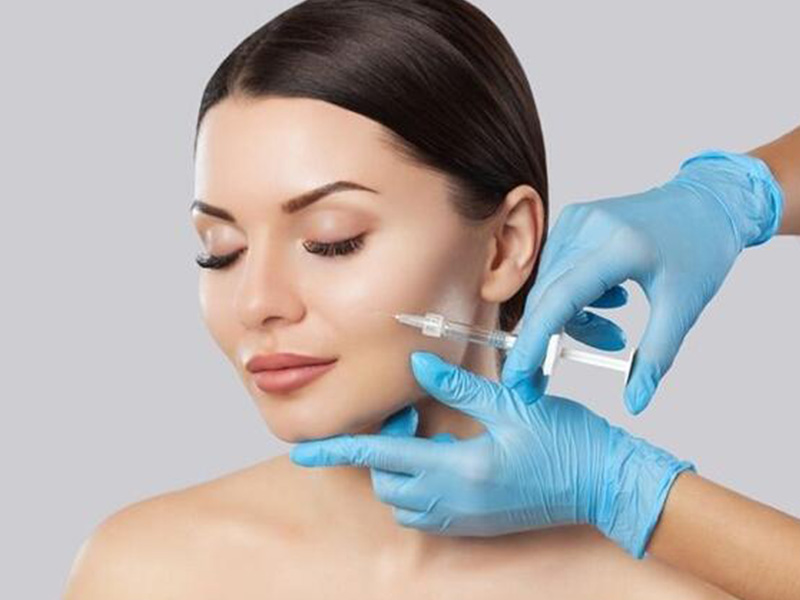
Mesotherapy is the application of homeopathic agents, pharmaceutical agents, vitamins, and plant extracts (essences) to the skin and subcutaneous tissue using the microinjection technique. The substances to be injected are selected according to the individual and the purpose.
When is Mesotherapy Used?
Mesotherapy can be successfully used not only for cosmetic purposes such as hair loss, skin rejuvenation, and localized slimming but also in pain mesotherapy. It is effectively used in almost all types of pain, especially in sports injuries, heel pain, Achilles tendon pain, carpal tunnel syndrome (nerve compression in the wrist), tennis elbow, golfer’s elbow, knee and back pain, and especially in all painful conditions related to osteoarthritis. The procedure is performed by physicians trained in mesotherapy.
Mesotherapy involves the administration of vitamins, minerals, amino acids, enzymes, and drugs to the middle layer of the skin. It was first applied by Dr. Michel Pistor in 1952 and has been accepted as part of traditional medicine by the French Academy of Medicine since 1987. It is still widely practiced worldwide. The initial application was in the form of injections. However, needle mesotherapy, due to its painful and bloody nature and the occurrence of bruising in some areas, often could not be completed. The type and amount of drug mixture used vary depending on the location of the treatment. Although the areas of use are very wide, the first ones that come to mind are sports injuries, musculoskeletal diseases, hair loss, and cosmetic treatments. The aesthetic problems for which mesotherapy is beneficial include cellulite, localized fat deposits, body shaping, weight loss, facial mesolifting, under-eye bags, stretch marks, and scar treatments.
Needleless mesotherapy (mesostar) works through electroporation. Microchannels formed by monopolar low-voltage electrical currents and prepared drugs pass through the skin to the target tissue with the help of polarization. Studies have shown that the needleless mesotherapy system provides more effective results than the needle method because it ensures a more homogeneous drug application. In fact, this system was initially introduced as a method used for the administration of cancer drugs in advanced countries, and later it started to be used as a successful technique for mesotherapy.
Cellulite and Mesotherapy
Drug cocktails penetrating the skin easily reach the subcutaneous fat tissue, burn fat cells, are used as energy, stimulate blood flow, stimulate lymph flow, and increase collagen production. In the areas where it is used, the fibrotic and connective tissue bands causing the orange peel appearance due to cellulite are dissolved, and the subcutaneous tissues relax. Also, the melting fat tissue reduces cellulite. The reason why mesotherapy is beneficial is that the applied skin layer originates from the mesoderm, which is the functional layer of the skin, has a rich vascular structure, hair follicle count, and connective tissue cell count. In the application technique, drugs are applied onto the cellulite area under the plates into a special layer. This application takes 6 minutes for each area. Thus, the drug application is completed painlessly, without tingling and without bleeding. In the old method, needle mesotherapy, the drug is administered to the cellulite area with a needle.
So far, many types of injectors have been used in mesotherapy. Injections are made into the dermis or subdermis. Some injectors are also used in the form of pistols to provide dose-adjusted drug delivery. However, pain, bleeding, and bruising are seen at the points where the needle enters in all of these applications. Due to these problems, many patients cannot complete the treatment. With the needleless mesotherapy method (mesostar), which has been applied abroad for a year, mesotherapy drugs can be easily delivered to the skin. In this method, drugs penetrate the skin through electroporation.
Facial Aging and Needleless Mesotherapy (Mesolifting)
By the time one reaches their thirties, the dryness of the skin and the decrease in oil content accelerate skin aging. Thus, the first signs of aging on the face, such as fine lines and wrinkles, begin to appear, and one faces loss of elasticity in the skin. Over time, wrinkles deepen, and sagging occurs in the skin.
In mesotherapy, vitamins, minerals, amino acids, enzymes, and drugs are administered to the middle layer of the skin. In addition to the mesolifting procedure for facial rejuvenation and wrinkle treatment, it is also used for neck, décolleté, and hand rejuvenation. In addition, mesolifting can be used to treat newly formed pink-colored skin cracks and spots to some extent.
After analyzing the individual’s skin needs, a treatment plan is made based on computerized skin analysis, followed by photography. Sessions last an average of 6-30 minutes, with a total of 4-6 sessions. There is no age limit for the needleless mesolifting procedure, which has no risks. Especially in individuals who smoke heavily, consume alcohol, are exposed to the sun, fluorescent lamps, and solariums, and cannot take care of their skin in intense work and stress environments, needleless mesolifting can be easily applied.
Mesotherapy for reducing under-eye bags has also begun to be used.
The drugs used in mesotherapy are approved by the Food and Drug Administration (FDA), sold in pharmacies, and mostly herbal products, with the lowest risk of reaction. Of course, the point to be noted is to select and use drugs that are compatible with each other in the cocktail. Generally, the substances injected into the skin are cocktails in liquid, gel, or cream form, which provide fullness to the skin and balance the moisture level, antioxidant vitamins such as hyaluronic acid, A, D, C, B, and E, selenium, ginkgo biloba, DMHA substance used in skin tightening, B5 vitamin, liquid obtained from copper and zinc. However, the drugs contained in the cocktails vary according to the purposes of use below. Although mesotherapy has been publicized for aesthetic and cosmetic purposes in the media, it has many areas of use, as seen below:
1. Aesthetic Uses
– Regional Weight Loss
– Body Skin Tightening
– Breast Firming
– Anti-aging
– Treatment of Under-eye Bags
– Treatment of Facial Sagging
2. Sports-related Conditions
– Arthropathy
– Barre-Lieou syndrome
– Muscle tear
– Meniscus tear
– Chronic joint swelling
– Ligament injuries
– Muscle injuries
– Overuse injuries
– Periostitis
– Plantar fasciitis
– Stress fractures
– Tendon diseases
3. Systemic Diseases
– Allergy
– Alopecia
– Asthma
– Autoimmune diseases
– Bronchitis
– Pediatric diseases
– Constipation
– Chronic fatigue
– Chronic infection
– Chronic sinusitis
– Smoking
– Chronic obstructive pulmonary disease
– Psychological disorders
– Coronary insufficiency
– Degenerative arthritis
– Depression
– Dysmenorrhea
– Generalized anxiety
– Gastritis
– Genital herpes
– Glaucoma
4. Skin Diseases